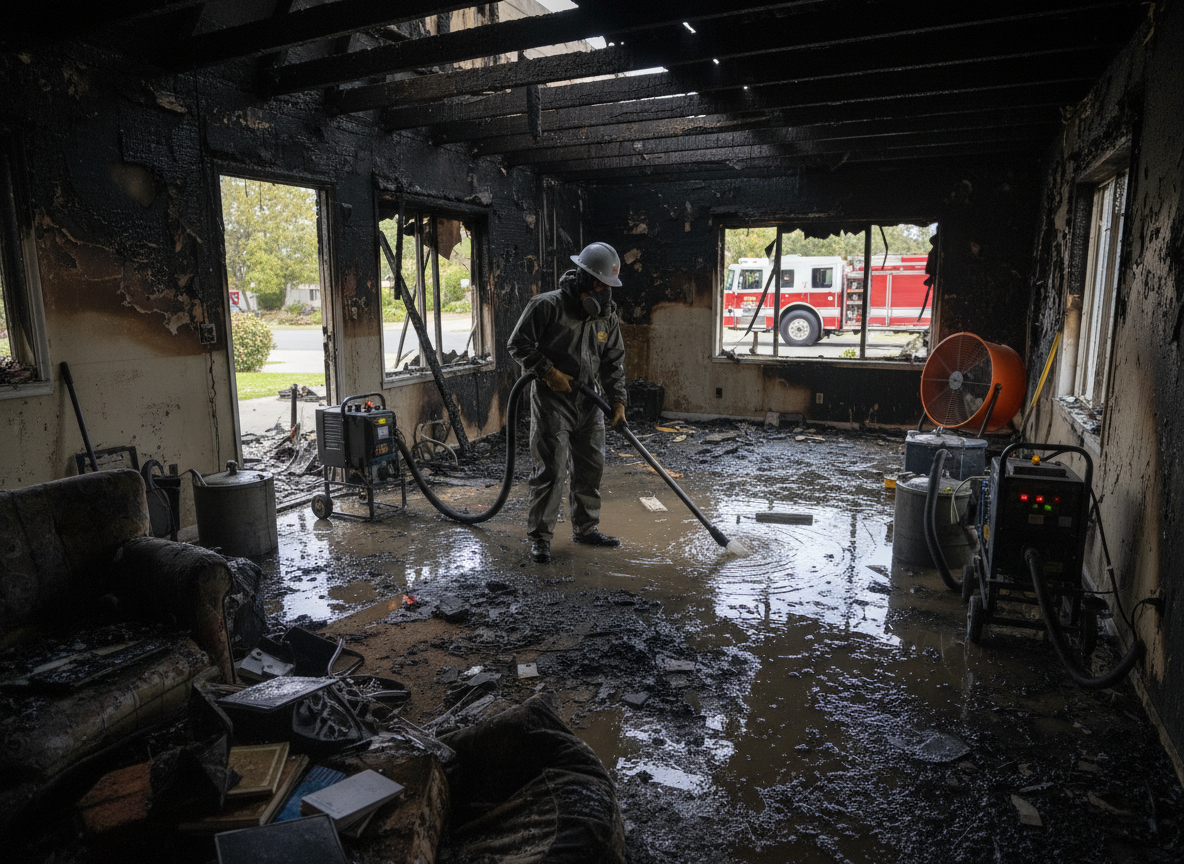
Laguna Woods Village homes built in the 1960s and 1970s often feature single-story layouts with attached garages and older plumbing that complicates water extraction after firefighters use high-volume hoses. The mild Mediterranean climate means suppression water can linger in slab foundations or under vinyl flooring for weeks without proper drying equipment, leading to hidden mold growth between the golf course fairways and residential clusters. Technicians must navigate narrow carports and shared walls in these retirement-community units while removing saturated drywall and insulation without disturbing neighbors.
Smoke and soot travel through HVAC systems common in Laguna Woods Village, depositing acidic residues on metal ductwork and electrical panels that require specialized neutralizers rather than standard water extraction. Near Laguna Hills borders, properties sit on gently sloping terrain that directs runoff toward lower units, increasing the risk of cross-contamination between neighboring condos. Remediation crews at our 24338 El Toro Rd location keep negative-air machines running 24/7 to capture particulates before they settle into carpet pads or behind kitchen cabinets.
Code requirements in Orange County call for documentation of moisture levels in concrete slabs and verification that all affected materials meet current fire and water standards before reconstruction begins. Homeowners frequently overlook water trapped inside hollow-core doors or under built-in cabinetry along the golf course edges, where irrigation lines already keep soil moist year-round. Proper sequencing prevents re-wetting of cleaned surfaces during the dry-out phase that follows initial extraction.
Technician insight
In Laguna Woods, the thing that catches most people out with water damage remediation after fire is how suppression water migrates under the slab in 1960s Laguna Woods Village condos because the golf course irrigation keeps the soil damp year-round, so you have to pull baseboards and run drying equipment longer than in newer Laguna Hills builds or the moisture just comes back up through the flooring.
Slab moisture after garage fire
Water from fire hoses pooled in a Laguna Woods Village garage and seeped under the slab into the living area. Infrared scans showed elevated moisture along the shared wall with the neighboring unit. Crews extracted water, placed drying mats under the slab edges, and ran dehumidifiers for five days until readings matched unaffected areas.
How it works
- 1
Initial Assessment
Technicians arrive within hours, document all affected rooms in Laguna Woods Village units, and test moisture in slabs and walls using infrared cameras.
- 2
Water Extraction
High-capacity pumps and wands remove standing suppression water from floors and garages while protecting shared walls with adjacent condos.
- 3
Drying and Dehumidification
Industrial air movers and dehumidifiers run continuously, targeting hidden pockets near the golf course terrain where drainage is limited.
- 4
Smoke and Soot Removal
HEPA filtration and chemical neutralizers clean HVAC systems and surfaces before any reconstruction in the 1960s-era homes.
- 5
Final Verification
Moisture readings and air quality checks confirm the property meets Orange County standards prior to handoff.
Pricing
Pricing depends on square footage affected, number of rooms, and whether HVAC cleaning is required; upfront written quotes provided after inspection.