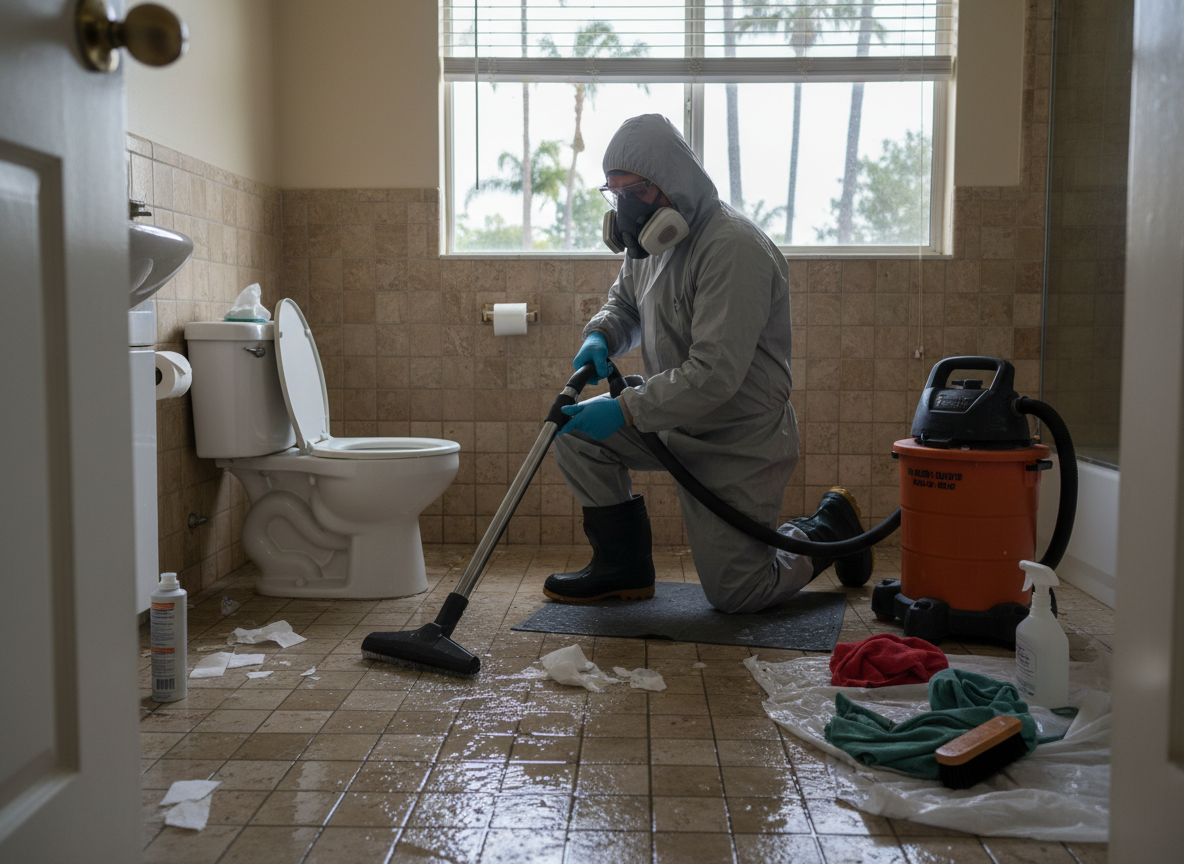
Toilet overflows in Laguna Woods Village often involve older plumbing common to the area's retirement community housing stock. Water spreads quickly across vinyl or tile floors and can seep into subfloors or shared condo walls before detection. The mild Mediterranean climate brings occasional heavy rains that raise indoor humidity, increasing mold risk on affected drywall and baseboards if extraction is delayed.
Technicians start by isolating the source and removing standing water with portable extractors suited for tight villa layouts near the Laguna Woods Village Golf Courses. Porous materials like carpet padding and underlayment are removed the same day, while antimicrobial agents treat hard surfaces to meet Orange County sanitation standards. Edge cases include water migrating to lower units in multi-story buildings along El Toro Rd, requiring moisture mapping with thermal cameras.
Homeowners in Laguna Hills frequently mistake minor overflows for contained events, yet hidden moisture behind cabinets or in HVAC returns can persist for weeks. Proper drying with air movers and dehumidifiers sized for the square footage prevents secondary damage claims. All work follows local building practices for older single-family and condo units without disturbing original electrical or plumbing lines unnecessarily.
Technician insight
In Laguna Woods, the thing that catches most people out with Toilet overflow cleanup is how water travels through the slab-on-grade foundations and shared walls typical of Laguna Woods Village condos, especially when older cast-iron drains leak slowly during the wetter winter months.
Overflow in Laguna Woods Village Villa
A toilet overflow during a winter rain event sent water across the bathroom and into the adjacent hallway of a Laguna Woods Village home. Inspection revealed moisture had wicked under the vinyl plank flooring and into the drywall base. Extraction and targeted drying prevented spread to neighboring units while preserving the original subfloor.
How it works
- 1
Initial Assessment
Technician arrives within hours, identifies water source, and maps affected zones in the home using moisture meters.
- 2
Water Extraction
Standing water is removed with commercial-grade pumps and wands, focusing on hard-to-reach areas under flooring.
- 3
Drying and Dehumidification
Air movers and dehumidifiers run continuously while monitoring humidity levels until materials reach dry standards.
- 4
Sanitation and Treatment
Antimicrobial solutions are applied to all contacted surfaces, followed by removal of unsalvageable porous items.
- 5
Final Inspection
Property is checked for remaining moisture and returned to pre-loss condition with documentation for insurance.
Pricing
Pricing varies by affected square footage, flooring type, and whether shared walls are involved; upfront quotes provided after inspection.