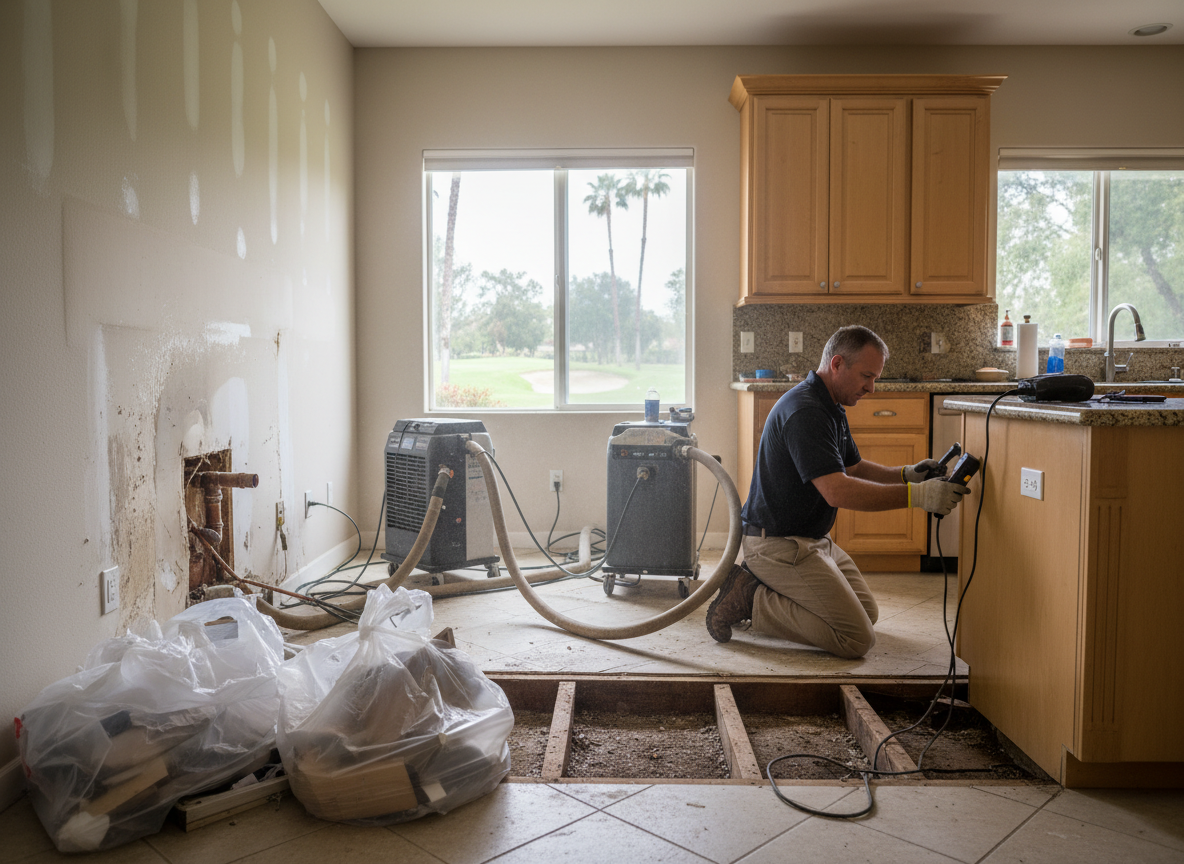
Kitchen water damage in Laguna Woods often starts with aging supply lines under sinks or failed dishwasher connections in the condos throughout Laguna Woods Village. The mild Mediterranean climate keeps temperatures steady but does little to prevent slow leaks that sit unnoticed behind cabinets until flooring or drywall softens. Orange County building practices in these 1970s-era units frequently place plumbing in shared walls, so water travels quickly to neighboring units near the Laguna Woods Village Golf Courses.
Technicians must pull back vinyl or laminate flooring to check plywood subfloors, which can delaminate from prolonged moisture even when surface puddles look small. Dishwasher leaks commonly run under adjacent base cabinets and into the toe-kick area, requiring removal of appliances and sometimes sections of drywall to reach trapped water. In Laguna Hills homes with similar layouts, we also watch for hidden damage where the kitchen meets the laundry room wall.
Repair work includes replacing saturated underlayment, treating mold on particleboard cabinet bases, and reinstalling fixtures only after moisture readings drop below 15 percent. Homeowners in Laguna Woods Village should expect at least two site visits because initial drying can reveal additional wet spots once cabinetry is moved.
Technician insight
In Laguna Woods, the thing that catches most people out with Kitchen water damage repair is how quickly water moves through the shared walls of Laguna Woods Village condos built on flat ground near the golf courses. A small sink leak can reach the unit next door before anyone notices because the original plumbing runs in common spaces and the mild climate keeps humidity high enough to slow natural drying.
Dishwasher Leak in Laguna Woods Village
Water appeared under the dishwasher after a cycle and spread into the adjacent cabinet. Inspection showed a cracked inlet hose and wet plywood under the vinyl. We removed the appliance, extracted water, dried the subfloor for three days, then replaced the damaged section and reconnected the unit.
How it works
- 1
Initial Assessment
Technician inspects the kitchen, checks moisture levels in floors and walls, and identifies the leak source while documenting damage for the homeowner.
- 2
Water Extraction and Containment
Remove standing water with extraction equipment, set up containment barriers, and protect unaffected areas from cross-contamination.
- 3
Drying and Monitoring
Place air movers and dehumidifiers, then return daily to track moisture readings until levels return to normal.
- 4
Repairs and Restoration
Replace damaged subfloor sections, treat affected cabinetry, and reinstall appliances once the space is dry.
Pricing
Upfront quotes provided after inspection; final cost depends on extent of hidden damage and materials replaced.