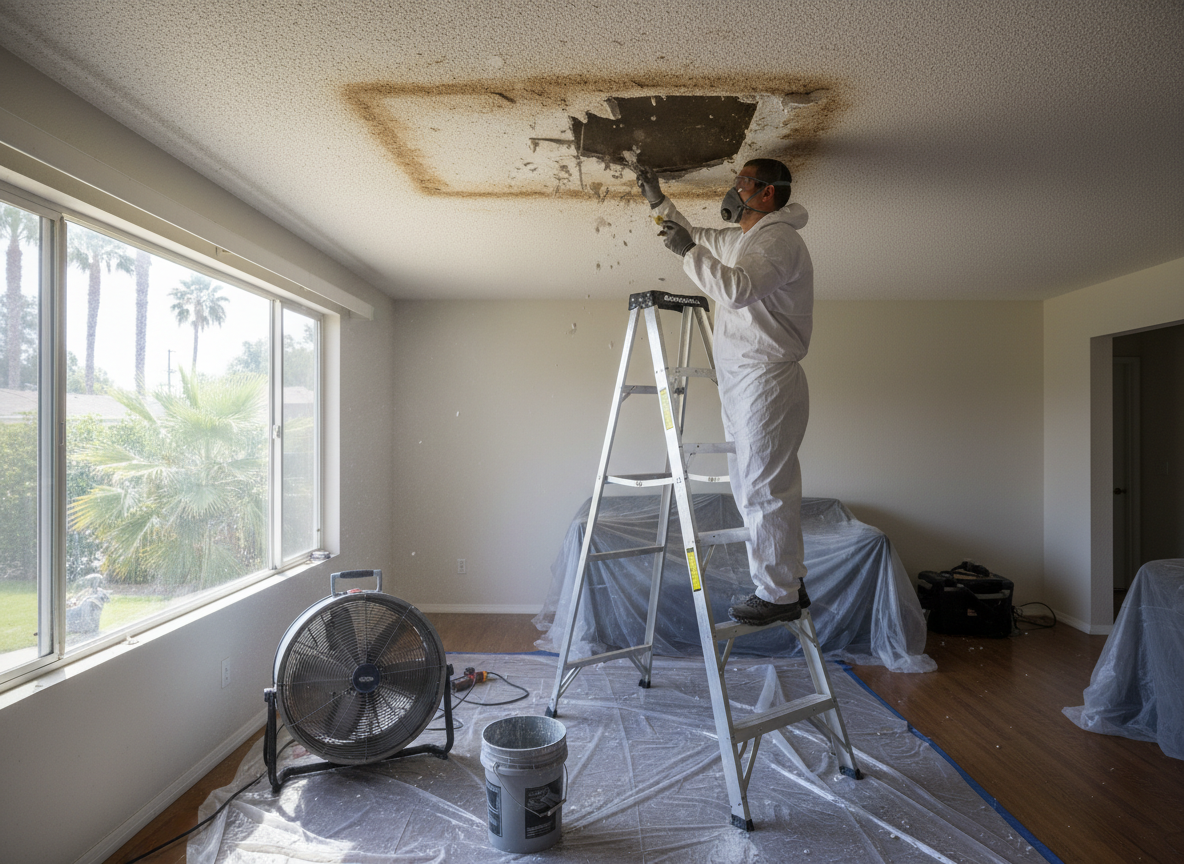
Ceiling water damage in Laguna Woods Village often stems from roof penetrations or pipe joints in the 1960s and 1970s condo stock that lines the edges of the Laguna Woods Village Golf Courses. Mild Mediterranean winters bring concentrated rain events that pool on flat or low-slope roofs before finding seams, saturating drywall and insulation above living spaces. Technicians must trace moisture with infrared cameras because water travels along joists and can reach neighboring units without visible ceiling stains in the source home.
Repair begins with isolating the leak source, which frequently involves coordination with the village association for roof access or shared plumbing risers. Once the water is stopped, affected drywall sections are removed to prevent mold growth in the humid coastal air. Replacement materials are matched to the original texture and thickness common in these units, and drying equipment is placed to pull moisture from the attic space without disturbing adjacent finished areas in tightly packed Laguna Hills border homes.
Edge cases include hidden leaks behind textured ceilings that were painted multiple times, making detection slower, and cases where water has wicked into crown molding or light fixtures. Local building practices in Orange County require permits for structural ceiling work when joists are compromised, so crews document conditions thoroughly before proceeding. Homeowners in Laguna Woods Village should avoid patching over stains until the source is confirmed, as repeated rain cycles can re-wet the same cavity.
After drying, repairs include installing new drywall, taping, and applying matching texture before priming with stain-blocking paint. Final walkthroughs check humidity levels in the attic to confirm no residual moisture remains that could affect neighboring units along El Toro Road corridors.
Technician insight
In Laguna Woods, the thing that catches most people out with Ceiling water damage repair is how the mild Mediterranean climate lets slow roof leaks from the village golf course-adjacent units soak through multiple layers of textured drywall before any ceiling sag appears, especially in the older Laguna Woods Village stock where shared attics run between units.
Slow Roof Leak in Laguna Woods Village Condo
A resident noticed a faint brown stain above the living room after winter rains. Inspection revealed water entering through a deteriorated flashing seam on the low-slope roof shared with the golf course boundary. Crews isolated the source, removed the wet drywall section, dried the joist cavity, and replaced the ceiling while coordinating with the village association for roof repairs. The unit returned to normal use within five days with no mold recurrence.
How it works
- 1
Source Identification
Use moisture meters and thermal imaging to locate the leak origin, often tied to roof valleys or shared plumbing lines in Laguna Woods Village condos.
- 2
Water Extraction and Containment
Remove standing water and set containment barriers to protect unaffected rooms while drying the ceiling cavity.
- 3
Drywall Removal and Drying
Cut out saturated sections, dispose of wet insulation, and deploy air movers and dehumidifiers until moisture readings stabilize.
- 4
Repair and Finish
Install new drywall, match texture, prime with stain blocker, and repaint to blend with existing ceiling surfaces.
Pricing
Cost depends on square footage affected, ceiling height, and whether roof or plumbing access requires association approval.