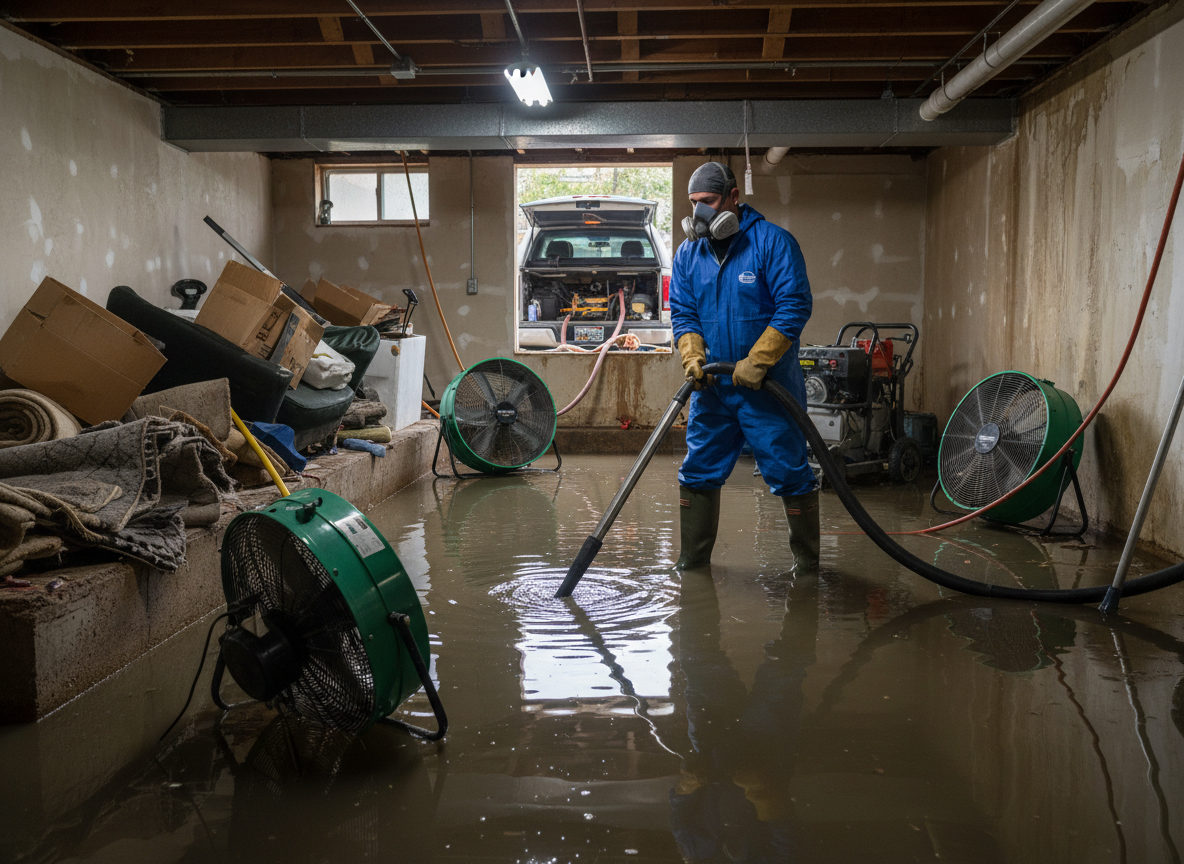
Laguna Woods sits in a mild Mediterranean climate where winter rains can still overwhelm older drainage around Laguna Woods Village. Many homes there were built decades ago with lower levels that sit close to the water table and near the Laguna Woods Village Golf Courses. When water enters, it often travels through clay soils that retain moisture far longer than sandy ground, turning a one-time leak into weeks of hidden dampness behind walls and under slabs.
Technicians at our 24338 El Toro Rd location respond within hours because standing water in these basements quickly affects electrical panels, HVAC returns and shared walls common in Village units. We map moisture with thermal imaging rather than relying on surface readings alone, then pull carpet and baseboards early so air movers can reach the concrete. Without that step, mold colonies form in the particleboard subfloors typical of homes built in the 1970s and 1980s.
Nearby Laguna Hills properties share similar terrain but often have better slope away from foundations. In Laguna Woods the flat pads and golf-course irrigation mean water can back up against garage thresholds and seep under slab edges. We document every layer removed and replaced so insurance adjusters see the full scope without multiple site visits.
Technician insight
In Laguna Woods, the thing that catches most people out with Basement flood cleanup is how the clay soil around Laguna Woods Village holds winter rain long after the storm passes, especially near the golf courses. Homeowners often stop at surface drying and miss the moisture that travels under the slab and into neighboring units.
Winter Rain Seepage in Laguna Woods Village
Heavy overnight rain pushed water under a garage slab in a Laguna Woods Village home. We found moisture tracking along the foundation edge into the finished basement. Extraction and targeted drying prevented mold growth in the particleboard flooring; the homeowner returned to a dry, odor-free space within five days.
How it works
- 1
On-Site Assessment
Technician inspects for hidden moisture paths through slab joints and shared walls using meters and imaging.
- 2
Water Extraction
Remove standing water and saturated materials before they migrate into adjacent units.
- 3
Drying and Monitoring
Place commercial air movers and dehumidifiers, then check daily moisture levels until readings stabilize.
- 4
Sanitizing and Restoration
Apply antimicrobial treatment to affected concrete and reinstall or replace finishes to match original construction.
Pricing
Cost depends on square footage affected, depth of water, and whether finishes must be removed; we provide upfront written quotes after inspection.